
The Complete Guide to Buying a Golf Driver
Choosing the right driver is one of the most important equipment decisions you'll make as a golfer. It sets the tone for every hole and, when matched correctly to your swing, can significantly improve both distance and confidence off the tee.
With so many makes, models, lofts, shafts, and technologies available, finding the right driver can feel overwhelming. Whether you're upgrading from an older model or shopping for your very first driver, this guide will help you understand what matters most when making a decision.
We'll cover everything from loft and shaft flex to head size and adjustability, helping you find a driver that suits your game and gives you the best chance of hitting longer, straighter drives.
Driver Basics: The Essentials
The driver, often referred to as the "1-wood," is the longest club in the bag and is designed to maximise distance from the tee.
Featuring the largest clubhead and lowest loft of any club, drivers are built to generate high ball speeds and long carry distances. They are often the most expensive club in a golfer's bag and can also be one of the most challenging to hit consistently.
Fortunately, modern driver technology has made significant advances over the past decade. Today's drivers feature sophisticated weighting systems, larger sweet spots, aerodynamic shaping, and adjustable settings that make them more forgiving and easier to launch than ever before.
For most golfers, the driver offers the greatest opportunity to gain distance while also improving overall scoring potential.

When Should You Upgrade Your Driver?
A well-maintained driver can remain effective for many years, but technology has improved significantly over recent generations.
If your current driver is more than five years old, upgrading could provide noticeable improvements in forgiveness, ball speed, launch conditions, and consistency.
You may want to consider upgrading if:
- You're losing distance compared to previous seasons
- Mishits are costing you significant yardage
- Your current driver launches too high or too low
- You struggle to keep the ball in play
- Your shaft no longer suits your swing speed
While newer isn't always better, improvements in face technology, weighting systems, and adjustability can make a meaningful difference for many golfers.
How Much Should You Spend on a Driver?
Golf equipment can be expensive, but that doesn't mean you need to spend hundreds of dollars on the latest release.
For many golfers, a quality pre-owned driver represents outstanding value. Drivers from major manufacturers that are only a few years old often deliver performance very similar to newer models while costing significantly less.
As a general guide:
- Entry-level used drivers: $100–$200
- Mid-range used drivers: $200–$400
- Premium recent-generation drivers: $400+
Choosing a quality second-hand driver can allow you to access premium technology while staying within budget.
Every driver we sell is carefully inspected, photographed, authenticated, and assessed before being listed, helping golfers shop confidently for quality pre-owned equipment.
What We've Learned from Selling Pre-Owned Drivers
One thing we've learned from inspecting and selling pre-owned golf drivers is that many golfers focus too heavily on buying the newest model available.
While technology continues to improve, we've found that loft, shaft flex, forgiveness, and overall fit usually have a much bigger impact on performance than simply upgrading to the latest release.
It's not uncommon for golfers to gain confidence and consistency by switching to a driver that's better suited to their swing, even if it's several generations older than the newest model.
We've also found that many golfers choose shafts that are too stiff for their swing speed. In many cases, selecting the correct shaft flex can improve launch, carry distance, and consistency more than changing clubheads alone.
For most golfers, the goal shouldn't be finding the newest driver. It should be finding the right driver.
Understanding Driver Head Size
Most modern drivers range from 440cc to 460cc, which refers to the volume of the clubhead — essentially, how large the driver appears at address. This size plays a major role in how the club performs and feels.
A 460cc driver is the maximum size allowed in competition and is designed to be as forgiving as possible. The larger head offers a bigger “sweet spot,” helping to reduce the impact of off-centre hits and maintain distance even on mishits. These models are ideal for golfers who prioritise consistency, confidence, and forgiveness off the tee.
On the other hand, 440cc drivers typically have a more compact shape that appeals to experienced or confident players. The smaller head allows for more workability and shot-shaping control, giving skilled golfers the ability to manipulate ball flight and trajectory more easily. They also tend to produce a slightly lower, more penetrating ball flight.
While drivers within this range might look similar at first glance, small variations in head size, shape, and internal weighting can dramatically affect forgiveness, feel, spin rates, and launch characteristics. Choosing the right head size ultimately depends on your swing speed, skill level, and personal preference at address.
What Materials Are Modern Drivers Made From?
Modern drivers are typically constructed using titanium, carbon fibre, or a combination of both.
Titanium remains one of the most popular driver materials due to its strength, durability, and ability to generate high ball speeds.
Carbon composite designs use lightweight panels to save mass, allowing more weight to be placed lower or deeper in the head for added forgiveness.
Many modern drivers blend both materials, giving golfers the best of both worlds: stability and speed. This smart use of materials lets brands fine-tune launch angles, spin rates, and forgiveness, so you can find a driver that complements your natural swing.
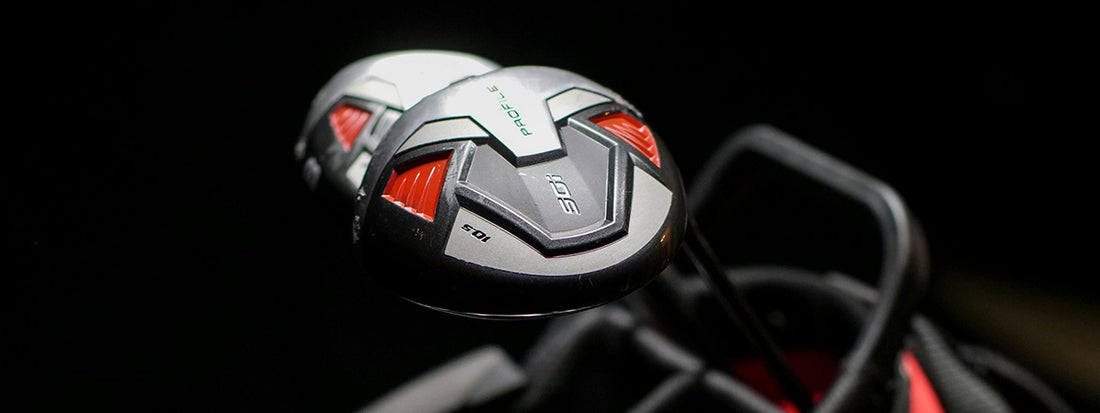
Shaft Length and Flex: Finding the Right Fit
The shaft plays a huge role in how your driver feels and performs. Most drivers fall between 43 and 46 inches in length, with 45 inches being the most common for a good mix of distance and control.
Longer shafts can create extra clubhead speed, but they’re also harder to control. Shorter shafts can improve accuracy, especially if you tend to miss the fairway.
You’ll also want to consider shaft flex, which affects how the club releases through impact:
Ladies (L) – Designed for slower swing speeds, helping increase launch and distance.
Senior (A or M) – Great for moderate swing speeds.
Regular (R) – Suits most average-speed golfers.
Stiff/Strong Regular (SR) – Suits golfers that are in-between regular and stiff swing speeds.
Stiff (S) – For faster swingers seeking a lower, more controlled flight.
X-Stiff (X) – Ideal for very fast swing speeds, typically seen in stronger players or professionals.
Choosing the right flex can instantly improve your trajectory, consistency, and feel.
Loft, Face Angle, and Adjustability
Driver loft typically ranges between 8° and 13°, and small changes can have a big effect on your ball flight.
Lower Loft Drivers (8°–10°)
Typically suited to golfers with faster swing speeds who naturally generate enough launch.
Benefits include:
- Lower spin
- More penetrating trajectory
- Increased rollout
Higher Loft Drivers (10.5°–13°)
Often beneficial for golfers with slower swing speeds.
Benefits include:
- Higher launch
- Increased carry distance
- Improved forgiveness
Face angle — how open or closed the clubface sits at address this also affects shot shape.
Open clubfaces promote a fade or slice.
Closed clubfaces encourage a draw or reduce slices.
Most modern drivers include adjustable hosels and moveable weights, letting you tweak loft, spin, and bias to match your swing. It’s like getting a mini custom fitting every time you play.
Which Driver Is Right for Your Skill Level?
Beginners
If you're new to golf, focus on forgiveness and ease of use.
Look for:
- 460cc head size
- 10.5°–12° loft
- Regular or senior flex shaft
- Forgiving driver designs
Mid-Handicap Golfers
Golfers looking to improve consistency should consider:
- Adjustable loft settings
- Forgiving head designs
- Appropriate shaft flex
- Mid-spin driver models
These features provide a strong balance between distance and control.
Lower Handicap Golfers
More experienced players may prefer:
- Lower-spin driver models
- Adjustable weighting systems
- Compact head profiles
- Stiff or X-stiff shafts where appropriate
These drivers often provide greater shot-shaping ability and trajectory control.
Additional Buying Resources


Our Range of Golf Drivers
-
Cobra King Cobra SS 350 10.5° - Driver (Regular)
Regular price $119.00 NZDRegular price -
TaylorMade SIM2 MAX 12° - Driver (Stiff)
Regular price $439.00 NZDRegular price -
Callaway PARADYM Ai SMOKE MAX 10.5° - Driver (Stiff Regular)
Regular price $499.00 NZDRegular price -
 Sold out
Titleist TSR2 9° - Driver (Stiff)
Regular price $599.00 NZDRegular price


Elevate Your Drives with ARC Golf
We hope this guide has helped you understand the key factors behind finding the right driver for your game. If you’re ready to explore options, browse our full range of used drivers at ARC Golf. All of our drivers are quality-checked, performance-tested, and ready to ship anywhere in New Zealand.
At ARC Golf, we make shopping for authentic second-hand golf clubs simple, secure, and affordable. With fast nationwide delivery, verified clubs, and a flexible return policy, you can shop confidently and focus on what really matters, enjoying your next round.
Prefer to shop by brand?
Explore driver ranges from Callaway, TaylorMade, Titleist, Ping, and more to find the best match for your swing.