
The Complete Guide to Buying Golf Irons
Your irons are the workhorses of your golf bag. From long approach shots into greens to controlled shots around the course, they're the clubs you'll use more than any others.
Choosing the right set of irons can improve consistency, confidence, distance control, and ultimately help lower your scores. However, with so many different iron types, shaft options, constructions, and technologies available, finding the right set isn't always straightforward.
Whether you're buying your first set of irons, upgrading from an older model, or looking for a specific type of iron to suit your game, this guide will help you understand the key factors that matter when making a decision.
What Are Golf Irons?
Irons are designed to provide precision, control, and distance throughout the middle portion of your golf game.
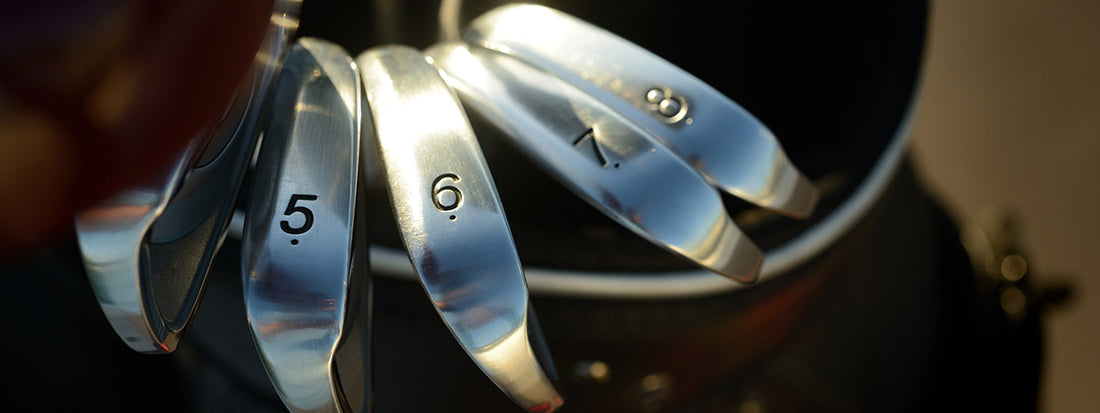
Traditionally, iron sets included clubs from 3-iron through to pitching wedge (PW), with each club featuring progressively more loft and a shorter shaft.
Generally speaking:
- Lower-numbered irons travel further but are more difficult to hit consistently.
- Higher-numbered irons launch higher and provide greater control into greens.
For example:
- A 4-iron is typically used for longer approach shots and lower ball flights.
- An 8 or 9-iron is designed for shorter approach shots that require more height and stopping power.
Modern iron sets often begin at a 5-iron or 6-iron, with many golfers replacing harder-to-hit long irons with hybrids for additional forgiveness and ease of use.
The Main Types of Irons
Not all irons are designed for the same golfer. Understanding the different categories is one of the most important steps when choosing a set.
Game-Improvement Irons
Game-improvement irons are built to maximise forgiveness and help golfers achieve more consistent results.
Common features include:
- Larger clubheads
- Wider soles
- Perimeter weighting
- Lower centres of gravity
- Higher launch characteristics
These design features help maintain distance and accuracy even when strikes aren't perfectly centred.
Best for:
- Beginners
- High handicappers
- Golfers seeking maximum forgiveness
Players Distance Irons
Players distance irons bridge the gap between forgiveness and performance.
They typically feature a cleaner appearance at address while incorporating technologies that help maintain distance and forgiveness.
Common features include:
- Moderate-sized clubheads
- Hollow-body designs
- Tungsten weighting
- Improved ball speed technology
Best for:
- Improving golfers
- Mid handicappers
- Players wanting distance with added control
Players Irons (Blades)
Players irons are designed for golfers who prioritise precision, feedback, and shot-making ability.
These irons typically feature:
- Compact clubheads
- Thin toplines
- Minimal offset
- Traditional lofts
While they offer exceptional feel and workability, they provide significantly less forgiveness than game-improvement designs.
Best for:
- Low handicappers
- Skilled ball strikers
- Golfers seeking maximum control
What We've Learned from Selling Pre-Owned Irons
One thing we've noticed from inspecting and selling pre-owned iron sets is that many golfers assume they need a more advanced iron than they actually do.
It's common for golfers to be drawn toward smaller, blade-style irons because they like the appearance at address or because they see professionals using them.
In reality, most golfers play better golf with slightly more forgiveness than they think they need.
We've also found that many players focus heavily on brand or model while overlooking factors such as shaft type, shaft flex, and overall club setup. In many cases, these factors have a bigger influence on performance than the name stamped on the clubhead.
The golfers who tend to be happiest with their purchase aren't necessarily those buying the newest or most expensive irons. They're usually the golfers who choose irons that match their current ability and playing style.
Cavity Back vs. Blade Design
One of the key differences you’ll notice between iron types is whether they have a cavity back or a muscle-back (blade) design.
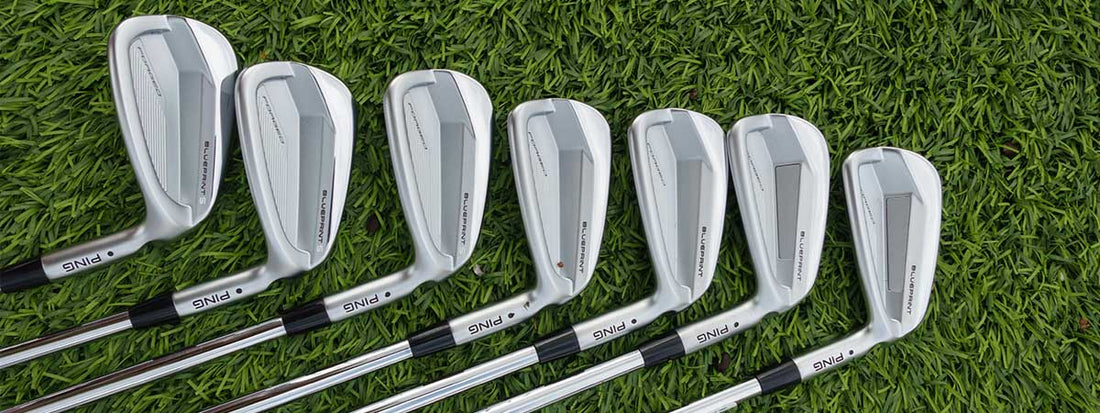
Cavity Back Irons – feature a hollowed-out rear section that redistributes weight to the perimeter. This makes them more forgiving and easier to hit, especially on off-centre shots.
Blades / Muscle Backs – have solid backs that deliver incredible feedback and feel, but only reward precise contact.
Many modern iron sets use a progressive combo design, where the long irons feature cavity backs for forgiveness, and the short irons shift toward a more compact, blade-like shape for better control and shot-making. This gives golfers the best of both worlds — distance and forgiveness in the long irons, precision and feel in the short ones.
Shaft Options: Steel vs. Graphite (and Why It Matters)
The shaft is just as important as the clubhead when choosing irons. It affects how the club feels, launches, and performs.
Steel Shafts
Steel shafts remain the most popular option for many golfers.
Benefits include:
- Greater consistency
- Enhanced control
- Improved feedback
- Lower cost
Steel shafts are often preferred by golfers with moderate to faster swing speeds.
Graphite Shafts
Graphite shafts are lighter and can help golfers generate additional clubhead speed.
Benefits include:
- Easier swing speed generation
- Reduced vibration
- Lighter overall club weight
- Increased comfort
Graphite shafts are often well suited to beginners, seniors, and golfers with slower swing speeds or joint discomfort.
Understanding Shaft Flex
The correct shaft flex can improve launch, consistency, and distance control.
Common flex options include:
- Senior (A)
- Regular (R)
- Stiff (S)
- Extra Stiff (X)
Choosing the correct flex is often more important than choosing a specific brand or model.
Forged vs. Cast Irons
Irons are typically made in one of two ways:
Forged Irons are shaped from a single piece of soft steel. They deliver excellent feel and are often preferred by advanced players who like to shape shots.
Cast Irons are created by pouring molten metal into a mould, which allows for more advanced perimeter weighting and forgiveness which is perfect for most golfers.
There’s no “right” choice here, it depends on your priorities. If you love buttery feedback and play often, forged may appeal. If you want forgiveness and affordability, cast is your friend.
Which Iron Type Is Right for Your Handicap?
Beginners & Higher Handicappers
If you're relatively new to golf, forgiveness should be your priority.
Look for:
- Game-improvement irons
- Cavity back designs
- Wider soles
- Graphite or regular-flex shafts
These features can make the game more enjoyable while helping improve consistency.
Mid-Handicap Golfers
Golfers looking to improve scoring and consistency often benefit from players distance irons.
Look for:
- Balanced forgiveness and control
- Modern distance technology
- Moderate-sized clubheads
- Shaft flex matched to swing speed
Lower Handicap Golfers
Experienced golfers may prefer players irons or compact players distance models.
Look for:
- Enhanced feedback
- Workability
- Compact profiles
- Traditional loft structures
Iron Set Makeup: How Many Should You Carry?
Most golfers carry between six and eight irons, often from 4–PW or 5–AW (approach wedge). As long irons get harder to hit, many players swap them for hybrids or high-launching utility irons.
A typical modern setup might look like:
4H, 5-PW, GW, SW, LW
The key is consistent distance gapping — ideally 10–15 yards between clubs. Poor gapping can create awkward yardages and lost scoring opportunities.
If your pitching wedge is 45°, your next wedge might be 50°–52° to maintain even distance spacing.
Fitting Considerations: Length, Lie, and Loft
Even when buying used or pre-owned irons, it’s important to understand fit:
Club Length: Taller golfers may need slightly longer shafts; shorter players may prefer shorter lengths for control.
Lie Angle: Determines how the clubhead sits at impact. A too-flat lie can send shots right; too-upright can push them left.
Loft Gapping: Ensures even distance separation between clubs.
ARC Golf’s listings include these specifications so you can make informed choices without needing a brand-new custom fitting.
Which Brand Should You Choose?
Every major golf brand brings something unique to the table. Here’s a quick overview of what we see most at ARC Golf:
TaylorMade Irons: Advanced tech for distance and forgiveness (great for most players).
Titleist Irons: Premium feel and control for better players.
Callaway Irons: Known for high launch and user-friendly design.
Ping Irons: Unmatched consistency and durability.
Mizuno Irons: Famous for soft feel and forged craftsmanship.
If there’s a specific model you’re chasing, we can often source it for you, even if it’s not currently in stock.
Browse Our Range Of Irons
-
Titleist AP2 712 5-PW - Iron Set (Stiff)
Regular price $499.00 NZDRegular price -
Titleist AP1 712 5-PW - Iron Set (Regular)
Regular price $499.00 NZDRegular price -
TaylorMade ROCKET BLADEZ MAX 6 PIECES - Iron Set (Stiff)
Regular price $499.00 NZDRegular price -
Mizuno MP-69 5-PW - Iron Set (Stiff)
Regular price $399.00 NZDRegular price


Tips for Buying Used Golf Irons
When purchasing pre-owned irons, there are several areas worth paying attention to.
Check:
- Clubhead condition
- Groove wear
- Shaft condition
- Grip condition
- Set composition
- Shaft specifications
At ARC Golf, every iron set is individually inspected, photographed, cleaned, and assessed before being listed for sale.
We verify condition and provide clear descriptions so golfers can make informed purchasing decisions with confidence.


Elevate Your Game with ARC Golf
Your irons are the backbone of your golf bag, the clubs you’ll use more than any others. Choosing the right set can help you hit more greens, control your distance gaps, and ultimately shoot lower scores. Whether you’re upgrading from your first beginner set or fine-tuning your setup with pre-owned premium irons, ARC Golf has you covered with our range of second-hand golf clubs. Explore our range of used golf irons in NZ today, featuring trusted brands like Titleist, Ping, TaylorMade, and Callaway — and take the next step toward improving your game.